
Modern agriculture faces growing pressure to reduce the environmental impact of synthetic fertilizers and crop protection products while maintaining reliable yields. Agrochemicals have played a central role in increasing agricultural productivity for decades, but their use is associated with greenhouse gas emissions, soil degradation, and biodiversity loss. At the same time, biological alternatives such as beneficial microorganisms are gaining attention as sustainable tools to improve plant health, enhance nutrient uptake, and strengthen crop resilience. Ensemo, an Austrian agritech startup based in Tulln, develops technology designed to integrate beneficial microorganisms directly into crop seeds before planting. The company combines microbiology with precision mechanical engineering to enable a new approach to biological seed treatment. At the core of Ensemo’s platform is the patented SeedJection® technology, which injects microbial inoculants directly into individual seeds. By placing microorganisms inside the protective structure of the seed rather than on its surface, the method helps preserve microbial viability and enables reliable delivery during germination.
Technology and Product
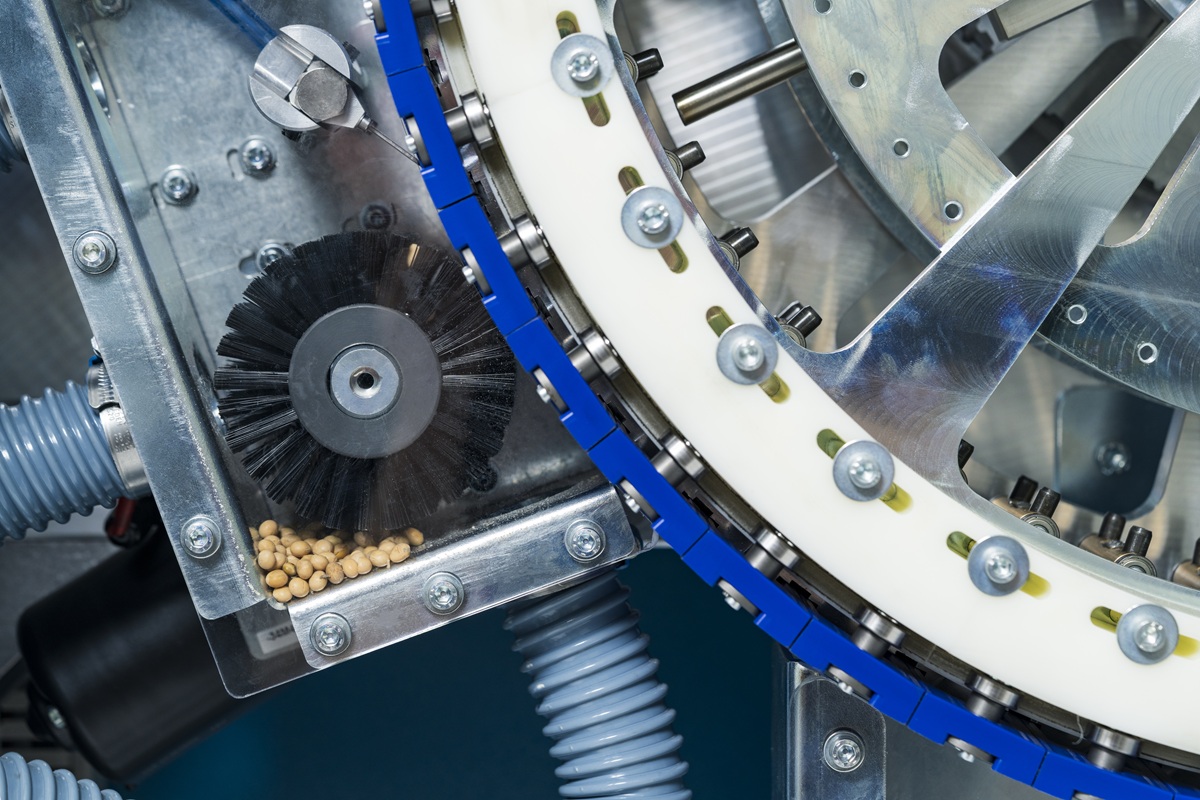
Ensemo’s core innovation is the SeedJection® platform, a high-precision system designed to introduce beneficial microorganisms directly into individual seeds. Instead of applying microbes through conventional seed coatings, the system creates a microscopic opening in the seed, injects a defined volume of microbial suspension, and seals the opening with a protective biopolymer layer. This approach protects microorganisms inside the seed, shielding them from UV radiation, dehydration, and mechanical stress that typically reduce the effectiveness of surface treatments. The industrial SeedJection® system processes up to around 3,000 seeds per second, enabling large-scale biological seed treatment for commercial agriculture.

Soybean seeds used for microbial seed treatment with Ensemo’s SeedJection® technology. (© Matthias Obergruber)
Industrial Fit and Applications
Biological crop inputs are becoming increasingly important as agriculture seeks to reduce synthetic fertilizers and pesticides while maintaining productivity. However, microbial products often face challenges related to stability and reliable delivery when applied through conventional seed coatings.
Ensemo’s first application focuses on soybean seeds treated with nitrogen-fixing rhizobia. By injecting these microorganisms directly into the seed, their viability can be preserved for months, allowing seeds to be treated well before planting while maintaining biological activity. The technology is designed to integrate into existing seed production processes and is currently being deployed with seed producers in Europe.

SeedJection® system enabling high-throughput injection of beneficial microorganisms into individual seeds. (© Matthias Obergruber)
Founding Team
Ensemo was founded by scientists and entrepreneurs Birgit Mitter (CEO) and Nikolaus Pfaffenbichler (CTO). The company emerged from research at the AIT Austrian Institute of Technology and focuses on scalable technologies for biological seed treatment. Its interdisciplinary team combines expertise in microbiology, agricultural science, and precision engineering to bring microbial seed technologies into industrial agriculture.

Ensemo team with founders Birgit Mitter (center) and Nikolaus Pfaffenbichler (third from left) (© Matthias Obergruber)
Company Info

Ensemo GmbH
Frauentorgasse 72-74,
3430 Tulln, Austria
Website: www.ensemo.com
Title image © Matthias Obergruber


You must be logged in to post a comment.